Search pages, blogs, and news.

How Agentic AI is Eliminating Operational Silos Across BFSI Enterprises

Publication Date
February 6th, 2026
Most enterprises learned governance through documentation, security through reviews, and guardrails through approvals.
That model worked when AI was experimental.
It worked when AI lived in pilots and analytical use cases — when models informed decisions rather than executed them. But it begins to break down the moment AI enters production, when models act, agents coordinate, and decisions run continuously across core business processes.
Governing AI through policies and approvals was sufficient when AI was peripheral. As AI moves into core operations. Triggering actions, coordinating workflows, and interacting with humans and enterprise systems in real time, that approach reaches its limits.
BFSI enterprises are now at this inflection point.
Every technology shift eventually requires a system
Every major technology transition follows a familiar pattern.
- Compute required operating systems
- Networks required protocols
- Data centers required orchestration
AI has now reached the same moment.
When AI:
- runs continuously
- triggers actions
- coordinates workflows
- interacts with humans and enterprise systems
It can no longer be treated as a collection of models or tools. It must be operated as a system.
For CTOs, this is not a tooling problem. It is an operating model problem.
Why Operational Silos Persist in BFSI
Most BFSI enterprises already use AI across lending, fraud, risk, compliance, claims, and customer operations. Yet operational silos persist—not because teams resist change, but because AI has been adopted along functional boundaries.
Each domain optimizes locally:
- Separate models, pipelines, and automation stacks
- Point solutions owned by individual teams
- Manual handoffs when workflows cross boundaries
- Human intervention driven by system limitations, not judgment
The result is fragmented execution. Decisions slow down at boundaries. Context is lost between systems. Exceptions proliferate.
Silos today are not just organizational. They are architectural.
Agentic AI is forcing enterprises to look at changing the Unit of Design
Agentic AI represents a structural shift in how AI is designed and deployed.
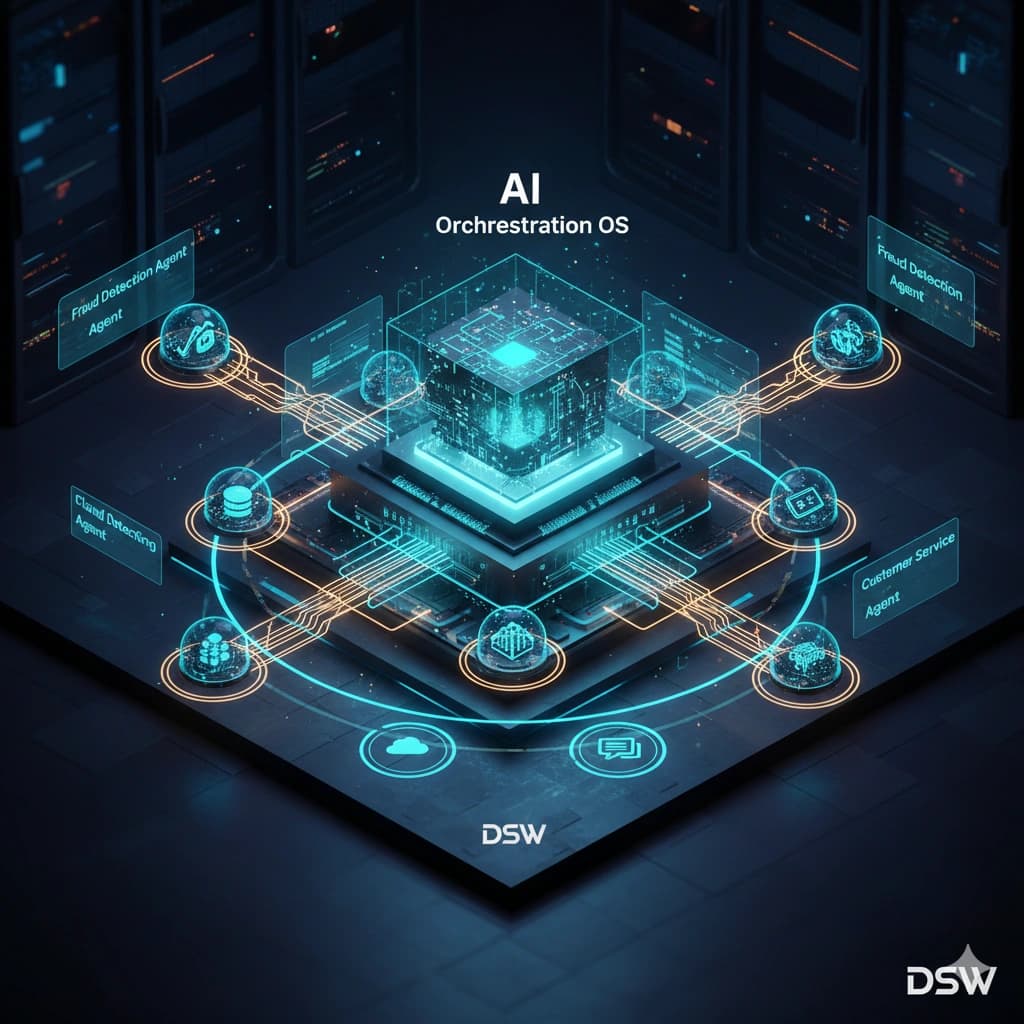
Instead of automating tasks, agentic systems assign ownership of outcomes to AI agents. An agent is not simply a model it is a goal-driven entity capable of reasoning, planning, acting, and coordinating across systems under defined constraints.
In a BFSI context, this means:
- A single agent can own a loan decision end-to-end
- Another can manage fraud resolution within risk thresholds
- Another can orchestrate compliance checks across workflows
The critical change is that coordination happens inside the system, not across teams.
Operational silos dissolve because workflows are no longer stitched together through manual escalation or brittle integrations. They are executed as cohesive, policy-aware systems.
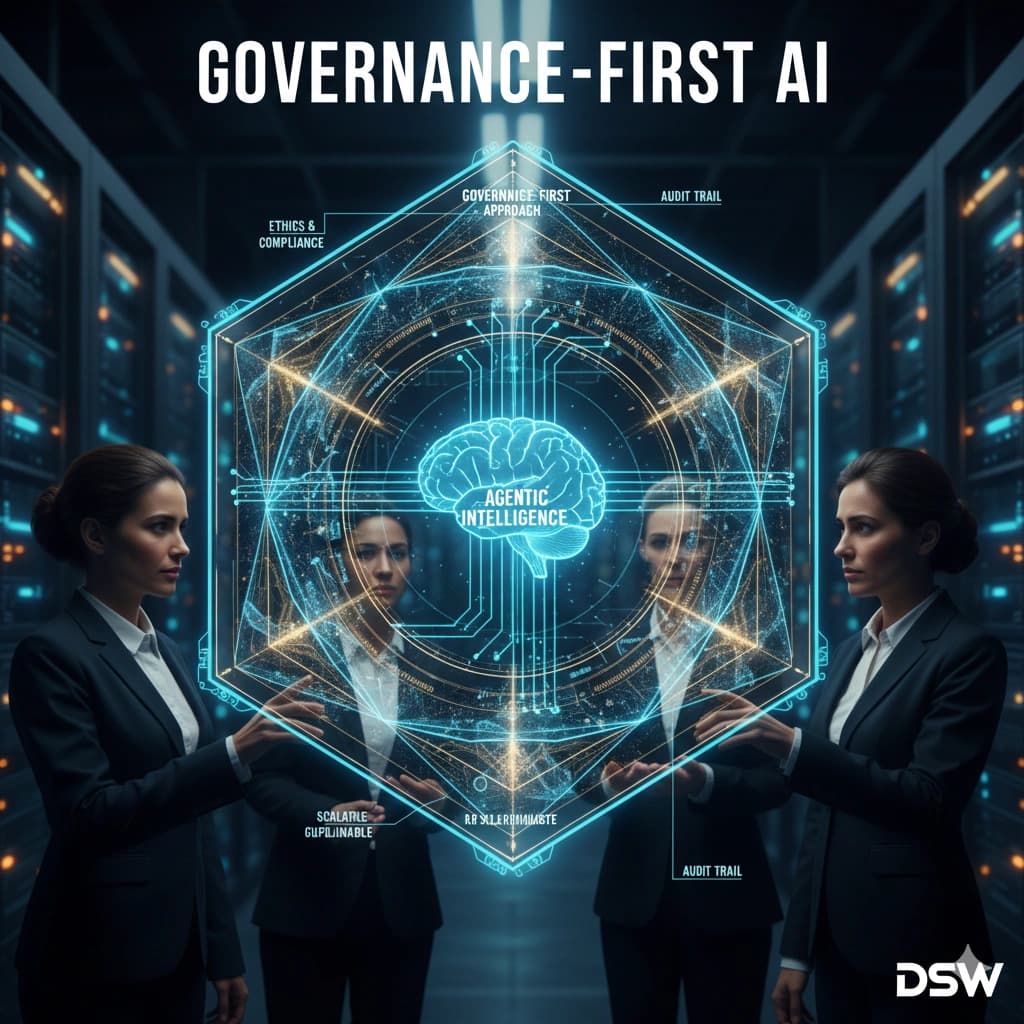
Governance becomes an operating layer
Autonomy in regulated environments naturally raises concerns. For BFSI CTOs, the question is not whether AI should act, but how to ensure control, traceability, and compliance at scale.
Agentic AI works only when governance is embedded by design.
Modern agentic architectures treat governance as an always-on operating layer, not a periodic review process:
- Policies define permissible actions, not just approval criteria
- Guardrails are enforced continuously at runtime
- Every decision is traceable, explainable, and auditable
- Human intervention is triggered by thresholds, not system gaps
This shifts governance from a bottleneck into an enabler. Systems move faster because they are designed to remain within policy boundaries by default.
From AI Projects to Enterprise AI Systems
One of the biggest challenges in BFSI AI adoption is that AI is still treated as a series of projects—each tied to a use case, a team, or a platform.
Agentic AI forces a return to first principles:
- Enterprise architecture
- Solution architecture
- System design
The focus moves from deploying models to operating AI as code, with lifecycle management, observability, versioning, and rollback built in. AI stops being something that “goes live” and starts being something that runs continuously.
For CTOs, the question is no longer:
How many AI tools or platforms have we adopted?
It is:
Can we operate AI as a system, under governance—reliably and predictably?
The next 12–16 months will define the leaders
The next 12–16 months will be decisive for BFSI enterprises.
This is the phase where organizations move beyond building AI to operating and governing agentic AI securely, at scale, in production. Those that succeed will eliminate operational silos not by reorganizing teams, but by redesigning how decisions flow across the enterprise.
Those that fail will accumulate technical debt in the form of disconnected agents, brittle automation, and governance retrofitted after incidents.
The shift has already begun.
The future belongs to enterprises that don’t just build AI, but can live with it, govern it, and trust it at scale.
Related Articles

See Pricing Details
Fill out the form