Search pages, blogs, and news.

Beyond AI Platforms: How Enterprise AI Architecture Must Evolve

Publication Date
October 30th, 2026
Category
Uncategorized
Reading Time
1 min
Author Name
Sandeep Khuperkar
The Enterprise AI Stack Is Entering Its Next Phase
The first generation of enterprise AI architecture was built around a relatively clear objective: make AI practical to develop and deploy. Data platforms helped prepare information for use, machine learning pipelines brought discipline to model development, and AI platforms gave teams a more structured way to experiment, deploy, and manage workloads. As generative AI emerged, this foundation expanded to accommodate LLMs, retrieval-augmented generation, copilots, and AI-powered applications.
These investments remain important. AI platforms have made it easier for organisations to move beyond isolated experiments and put AI into real business environments. They have also given engineering teams a foundation on which to develop new capabilities without rebuilding every component from scratch.
What is changing is the architecture required around those capabilities. An enterprise AI environment increasingly contains different types of workloads that do not operate independently. A predictive model might provide a risk score to an application, an LLM might interpret supporting documents, and an agent might use the results to coordinate the next steps in a workflow. Each component may be built with a different framework or run on different infrastructure, yet the business process depends on all of them working together.
This evolution raises a technology question that deserves more attention: how should the enterprise AI stack be designed when AI is no longer limited to individual models and applications, but increasingly operates through connected workflows and systems?
From Model-Centric Architecture to Connected AI Systems
Traditional machine learning architecture was largely organised around the model lifecycle. Data moved through preparation and training pipelines, models were evaluated and registered, and approved versions were deployed to production. MLOps brought repeatability to this process through experiment tracking, version control, deployment automation, and monitoring.
Generative AI introduced additional architectural requirements. Teams needed ways to connect LLMs to enterprise knowledge, retrieve relevant information, manage prompts, integrate external tools, and evaluate application behaviour. In many organisations, these capabilities have been added to the existing stack through new platforms, frameworks, and services.
Agentic AI extends the architecture further. Instead of simply returning an output, an agent can select tools, retrieve information, interact with APIs, and coordinate multiple steps towards a goal. A workflow may involve several models and agents, with the result of one action determining what happens next.
The architecture must now account for the relationships between these components, not just the lifecycle of each one. Developers need to understand how workloads are connected. Engineering teams need to manage execution across different runtimes. Security teams need visibility into interactions with data and tools. Operations teams need to investigate behaviour across the entire workflow rather than looking at one model in isolation.
This does not make the model lifecycle less important. It means the model lifecycle is becoming one part of a wider enterprise AI architecture.
Why Adding More Tools Is Not the Same as Evolving the Architecture
Enterprise technology rarely develops all at once. New capabilities are often introduced to address immediate requirements, and that is a reasonable way to make progress. An organisation might adopt an MLOps tool for model deployment, an LLM framework for a GenAI application, an agent orchestration library for an autonomous workflow, and separate monitoring systems for production visibility.
Each technology can serve a valuable purpose. The architectural challenge emerges when these capabilities need to work together consistently.
For example, a development team might build an agent using one framework while another team uses a different approach. Both agents may need access to enterprise APIs, but their permissions, execution histories, and monitoring mechanisms may be managed separately. If a business workflow connects them, the organisation must understand not only each agent’s behaviour but also how the overall sequence of actions is coordinated.
The response should not be to eliminate every technology choice or force all development into a single framework. Enterprise environments will continue to use different models, tools, infrastructure, and development approaches. The more important architectural decision is where common operating responsibilities should sit.
Which layer coordinates execution across workloads? Where are permissions applied when an agent calls a tool? How can an organisation maintain a consistent view of AI activity across different applications? How can existing AI platforms and infrastructure continue to be used without creating a separate operating model for every new deployment?
These questions point towards a broader operating layer within the enterprise AI stack.
The Emergence of an Enterprise AI Operating Layer
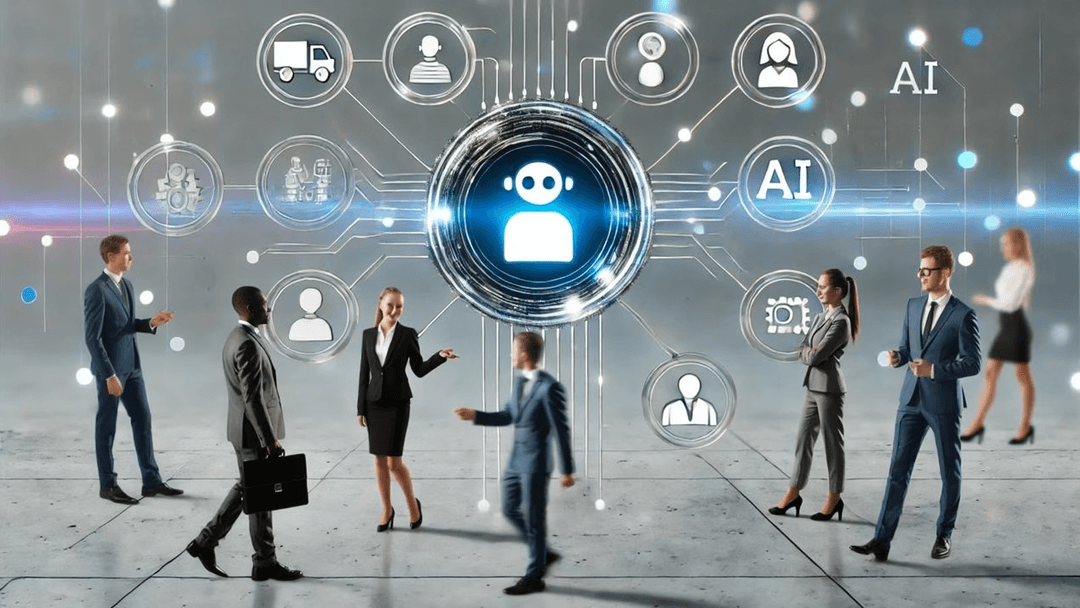
An Enterprise AI Operating System represents an evolution in how the enterprise AI environment is organised. Rather than focusing only on developing or deploying individual workloads, it provides a common operating layer across models, LLMs, agents, tools, data, workflows, and applications.
Its role is to connect capabilities that may have been developed and deployed independently, while providing shared mechanisms for orchestration, runtime governance, observability, and operational control. The underlying models and applications can remain different. What becomes more consistent is the environment in which they operate.
Consider an AI-powered insurance claims workflow. A model may identify a potentially suspicious claim, an LLM may help interpret supporting documents, and an agent may retrieve additional information or initiate a permitted workflow action. The architecture needs to coordinate these components while maintaining visibility into the data they access, the tools they use, and the actions they perform.
A shared operating layer can provide a common place to manage these interactions. It can also help ensure that relevant permissions and policies are considered during execution, rather than being implemented differently in every application. Observability can extend across the workflow, giving technical and operational teams a clearer picture of how the components worked together.
The distinction is architectural rather than simply functional. The aim is not to add another tool that solves one more problem. It is to establish a layer that allows the existing and future components of enterprise AI to operate within a more coherent environment.
Designing for Runtime Governance and Observability
As AI architecture becomes more interconnected, governance and observability need to be considered as part of the execution design.
In a model-centric environment, teams may concentrate on model approval, deployment permissions, performance monitoring, and periodic reviews. These remain necessary, but agentic workflows introduce decisions and actions that can unfold across several systems. Controls must account for what a workload is attempting to do, the information it is accessing, and the tools or services it is invoking.
This is where AI runtime governance and governance-as-code become relevant architectural capabilities. Policies can be translated into executable controls and applied during AI execution, according to the permissions and boundaries defined for the workload. The implementation must be designed to ensure that relevant execution paths cannot simply bypass those controls.
Observability requires a similar evolution. When a workflow produces an unexpected outcome, a technology team may need to trace the models involved, the information retrieved, the tools called, and the sequence of actions that followed. Monitoring individual components remains useful, but understanding the overall execution becomes increasingly important when multiple AI capabilities contribute to a single business outcome.
These capabilities should not be treated as isolated add-ons introduced after an application is built. They need to be considered when designing the operating environment itself. The architectural objective is to make governance and visibility reusable across workloads, while still allowing controls to reflect the requirements of different business processes.
Preserving Flexibility Across Models and Infrastructure
The next stage of enterprise AI architecture also needs to preserve technology choice. Organisations may use commercial foundation models, open-source models, internal models, different orchestration frameworks, and a mix of cloud, private cloud, hybrid, and on-premises infrastructure.
A sound operating architecture should not require enterprises to abandon these investments simply to gain a more consistent way of managing AI. Instead, it should provide a common layer that works across the technologies the organisation chooses to use, subject to the capabilities and integrations supported by the implementation.
This matters for more than convenience. The choice of model provider or infrastructure can affect cost, performance, data handling, deployment flexibility, and long-term dependency. For organisations with Sovereign AI requirements, the ability to maintain control over their data, AI assets, deployment environment, and generated intelligence may also shape architectural decisions.
An Enterprise AI Operating System can support this direction by separating the operating responsibilities of enterprise AI from the specific models and tools used to implement it. That separation helps organisations evolve their AI capabilities without making every architectural change a complete rebuild.
What Technology Leaders Should Consider Next
For technology leaders, the transition does not begin with replacing the existing AI stack. It begins with understanding which responsibilities are already handled well and which have become fragmented as the environment has grown.
An organisation may have mature model deployment pipelines but limited visibility across agent-driven workflows. It may have strong identity and access management but inconsistent ways of applying permissions to AI tool calls. It may monitor individual models effectively while struggling to trace the sequence of events behind an unexpected outcome.
These gaps help identify where the architecture needs to evolve. The goal is to build on what works, retain useful existing investments, and introduce shared operating capabilities where the current design no longer meets enterprise requirements.
The timing and extent of that transition will differ by organisation. An enterprise running a small number of conventional models may have different needs from one deploying agents across claims, customer service, underwriting, and internal operations. What matters is whether the architecture can support the next stage of AI adoption without allowing integration, governance, and operational complexity to grow unchecked.
Where DSW UnifyAI OS Fits
DSW UnifyAI OS – The Enterprise AI Operating System is designed around this evolution in enterprise AI architecture. It provides an operating layer across AI and ML workloads, GenAI applications, models, LLMs, tools, agents, data integrations, and workflows, bringing capabilities for orchestration, runtime governance, and observability into a common environment.
Its architecture includes AI Studio, GenAI Studio, Data Integration Toolkit, Feature Store, Model Repository, LLM Hub, Tool Hub, and Agent Orchestrator. These capabilities support the broader objective of helping enterprises operate AI across their existing technology environments rather than treating every use case as a separate deployment with its own operating approach.
The focus is on enabling enterprises to retain flexibility over the models and tools they use while establishing a more consistent foundation for AI execution and control. As AI becomes more interconnected, that operating foundation can help technology teams manage the relationships between workloads without losing sight of governance, visibility, and enterprise ownership.
The Architecture Must Evolve With the Technology
AI platforms helped establish the foundation for enterprise AI by making models and applications easier to build and deploy. That foundation is still needed. But the architecture around AI must continue to evolve as systems become more connected, agents begin to take actions, and AI becomes embedded in business workflows.
The next stage is not about discarding existing platforms or replacing every component in the technology stack. It is about introducing an operating layer that connects those components and provides a more consistent way to coordinate, govern, observe, and operate them.
For technology leaders, this is an architectural decision about how enterprise AI will be run over time. The models will continue to change. New frameworks and tools will emerge. Infrastructure choices will evolve. The operating environment needs to accommodate that change while helping the enterprise retain control.
The future of enterprise AI will depend not only on what organisations can build, but on how well their architecture allows those capabilities to work together.
Related Articles





See Pricing Details
Fill out the form